
Review · SINGAPORE
Singapore Street Food and Ethnic Quarters Kick Scooter Tour
Singapore tastes better on two wheels. This 3.5-hour evening tour links seven vegetarian-friendly foods and drinks with temples, old quarters, colorful shophouses, and lively streets. I like the unusual route, which goes far beyond the usual food stops, and I like the small-group limit of 15 people. The main drawback is simple: you need to feel comfortable on a kick scooter, and the 5 p.m. start depends on good weather.
I also like the excellent value at $55.43 per person. That price covers the scooter experience, a guide, and food tastings across several neighborhoods. Just arrive hungry, wear comfortable shoes, and allow a little patience while you get your balance. One guide, Ms Ping, earned special praise for being attentive and helpful throughout the outing.
Key points to know before booking
- Seven food and drink tastings: Try dosai, masala tea, popiah, chwee kway, muah chee, bubur pulut hitam, and pisang goreng.
- A quick tour of many districts: The route covers Little India, Albert Mall, Bugis, the old European quarter, Kampong Glam, and more.
- Kick scooters save time: You can cover a wider area than on a walking food tour, though balance matters.
- Small group format: The maximum is 15 people, which gives the guide room to help with food choices and scooter handling.
- Best for adults and older children: Children aged 7 and under cannot join, and people over 100 kilograms are not accepted.
- Evening timing: The 5 p.m. departure leads into Singapore’s lively night streets and market areas.
Why this Singapore food tour feels different
Many food tours stay inside one neighborhood. This one uses a kick scooter to connect several parts of central Singapore in a single evening. You begin in Little India, pass through sites linked to Chinese, Hindu, Buddhist, Taoist, Jewish, Japanese, Catholic, and Malay communities, then finish near Kampong Glam.
That broad route is the tour’s biggest strength. You are not only eating. You are seeing how Singapore’s communities sit close together, often within a few minutes of one another. The ride gives the evening a useful rhythm: short cultural stops, a food break, another ride, then another taste.
The scooter also changes the pace. On foot, the route would feel long for a food outing. By scooter, you can reach Selegie, Albert Mall, Bugis, the old European quarter, and Kampong Glam without spending most of the tour walking between them.
There is one practical catch. If you are wobbly at first, the opening part may feel less relaxed than a normal walking tour. One guest needed time to get used to the kick scooter, but eventually found it manageable. Give yourself permission to start slowly and listen carefully to the guide.
More Electric Scooter Tours in the world:
- Budapest Small-Group Guided Tour on MonsteRoller e-Scooter
★ 5.0 · 1,517 reviews - Budapest: Small-Group MonsteRoller E-Scooter Tours
★ 4.9 · 1,198 reviews - Prague: Fat Tire E-Scooter Guided Tour
★ 5.0 · 802 reviews
Little India begins with color and worship
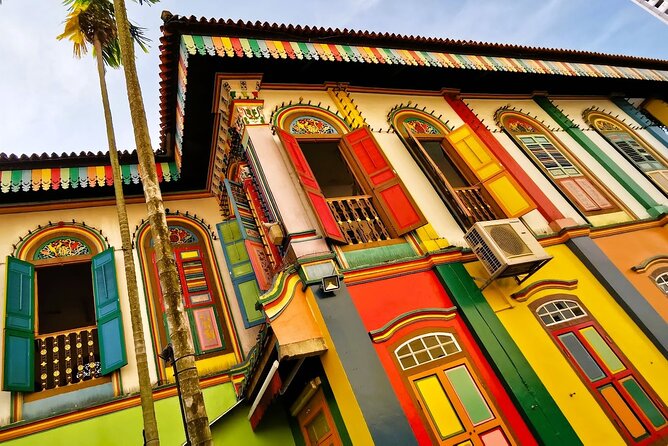
The tour starts in Little India at 5 p.m., a useful time for avoiding the strongest midday heat. The first photo stop is the House of Tan Teng Niah, a brightly painted Chinese villa built in 1900 by a Chinese merchant for his wife. It is the only Chinese villa left in Little India, making it an unusual reminder that the neighborhood was never only one community’s story.
You get about two minutes here, so treat it as a quick orientation and photo stop rather than a full visit. The color makes the building memorable, but the real value is the contrast: a Chinese home in a district strongly associated with Indian culture.
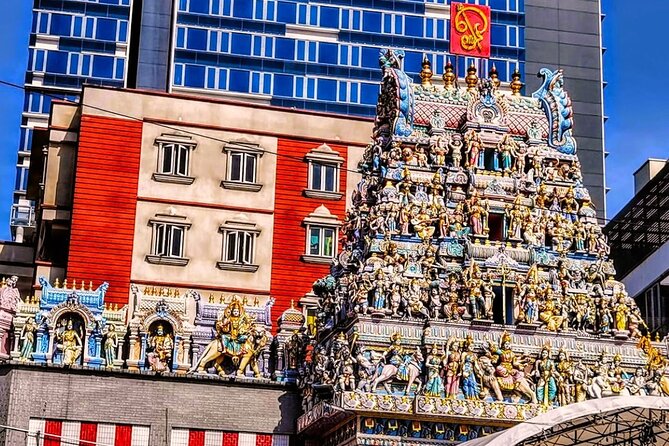
Next comes Sri Veeramakaliamman Temple, founded in 1855 and dedicated to the goddess Kali. The stop lasts about 10 minutes. That gives you enough time to look at the temple setting and understand why Little India remains such an important religious center.
The route then moves to Komala Vilas Restaurant for the main first tasting. Here you try a giant dosai cone with masala tea. The dosai is a thin South Indian crepe, but the cone presentation gives this familiar dish a playful twist. It is also the sort of food that works well early in the tour because it provides a proper savory base before the smaller snacks later on.
The food is vegetarian-friendly, but you should still tell the guide about any dietary needs. One of the strongest points from the feedback is that Ms Ping adjusted the food arrangements when needed.
Campbell Lane shows Little India’s working side
After the dosai, you ride through Campbell Lane. This is a short stop, around 10 minutes, focused on traditional Indian trades such as sweetmeat shops and flower stores.
This part is less about sitting down and more about reading the street. Flower stalls, sweets, and shopfronts give you a look at the daily business of the neighborhood. You also get a break from formal landmarks, which helps the tour feel like a city outing rather than a checklist of monuments.
Because the stop is brief, do not expect a long shopping visit. Instead, use it to notice the details around you and ask the guide questions while the group is still in Little India.
Selegie and Albert Mall connect old communities with new food
The scooter ride takes you toward Selegie, where the guide points out remnants of Singapore’s former Jewish Quarter and Little Japan. The references are easy to miss if you are exploring alone. This is where the tour’s route becomes especially useful, since the guide gives meaning to streets that may otherwise look like ordinary city blocks.
The next stop is Sri Krishnan Temple, built in 1870 and dedicated to Lord Vishnu. It is known for being a Hindu temple where Buddhist and Taoist followers also worship. The stop is only about two minutes, but its importance is clear: Singapore’s religious life does not always fit into neat categories.
Nearby, Kuan Yin Thong Hood Cho Temple dates from 1884 and is dedicated to the Goddess of Mercy. It is associated with fortune telling and is one of the city’s busiest temples. Again, the visit is short, so you will not have time for a long temple exploration. Still, placing it beside Sri Krishnan Temple gives you a quick look at different traditions within the same central district.
Albert Mall is the main hawker-center food stop and lasts about 30 minutes. This area has become known as Today’s Chinatown, and here you sample several vegetarian-friendly foods:
- Popiah, a fresh Chinese spring roll
- Chwee kway, steamed rice pudding topped with radish and sambal
- Muah chee, glutinous rice pieces coated with nuts and sugar
- Bubur pulut hitam, a black glutinous rice dessert with coconut cream
This is where the tour earns much of its price. You are not paying for one large meal in one restaurant. You are trying small portions from different food traditions, with the guide helping connect each dish to the neighborhood around you.
The food selection also gives you a good mix of textures. Popiah is soft and fresh, chwee kway is gentle but gains flavor from the toppings, muah chee is chewy and sweet, and bubur pulut hitam finishes the stop with a creamy dessert. You may not leave Albert Mall stuffed, but you should leave with a much better sense of Singapore’s hawker culture.
More Scooter Food Tours in the world:
- Ho Chi Minh City: Food Tour by Scooter with Eleven Tastings
★ 5.0 · 1,502 reviews - Saigon Evening Food Tour by Scooter
★ 5.0 · 944 reviews - Saigon Afternoon Unseen Street Food by Scooter |Opt: Ao Dai Rider
★ 5.0 · 854 reviews - Rome Afternoon Sightseeing Vespa Sidecar Tour with Gourmet Gelato
★ 5.0 · 692 reviews
Bugis brings market energy and a layered past
The route continues to Bugis Street, now a busy marketplace. The stop lasts only about five minutes, so you will see the area rather than browse it in depth.
The guide also points out that Bugis Street was once an infamous red-light district. Its present-day market identity is very different, which makes the area a good example of how Singapore’s central neighborhoods change over time.
At Bugis Junction, the tour searches for traces of the old Japanese quarter. Before World War II, Japanese-owned businesses in Singapore included brothels and photography studios. The details can be difficult to spot without local explanation, which is why this section works better with a guide than on a quick independent walk.
The stop is brief, but it adds another layer to the evening. The tour is not presenting a polished single-story version of Singapore. It points to trade, religion, entertainment, migration, and redevelopment, all packed into a compact urban area.
Churches and CHIJMES shift the mood
St Joseph’s Church marks the old European quarter. Established by a Portuguese mission in 1853, it is one of Singapore’s most striking Catholic churches. The visit is listed as a quick two-minute stop, so your time is mainly for a look at the exterior and a short explanation.
The route also passes the oldest Catholic church in Singapore. This part of the tour gives you a sharp change of setting after the temples and hawker center. Singapore’s central districts bring these religious buildings close together, and the scooter makes it possible to see several in one evening.
At CHIJMES, you get about 10 minutes. The site began as a Catholic girls’ school and orphanage and is now a food, entertainment, and lifestyle complex. This is a useful stop for understanding how older buildings can take on new uses without disappearing from the city’s daily life.
Raffles Hotel Arcade follows, with about 20 minutes devoted to the famous hotel complex. Raffles once hosted figures such as Charlie Chaplin, Elizabeth Taylor, and Michael Jackson, and it is linked to the origin of the Singapore Sling. You do not receive a separate drink tasting here, so think of this as a landmark stop rather than another food break.
Kampong Glam finishes with Malay flavors
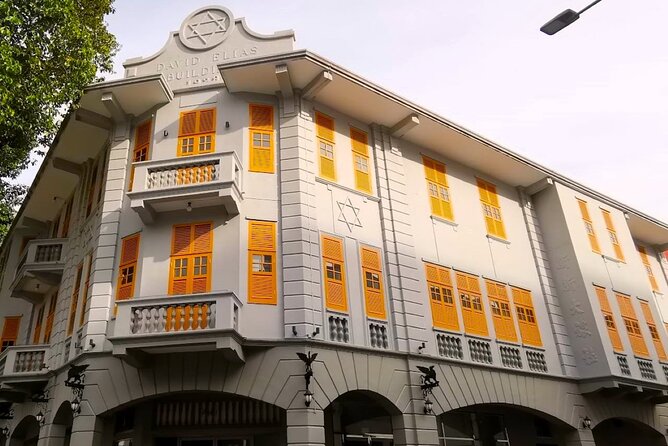
The final section takes you to Kampong Glam, once the seat of Malay royalty. Haji Lane is the liveliest stop in this part of the route, with about 10 minutes to take in its nightlife atmosphere and colorful streetscape.
Then you visit Sultan Mosque, originally built in 1824. It is named for Sultan Hussein Shah, who signed the 1819 treaty that allowed the British to set up a trading post in Singapore. The mosque provides an important link between Malay royalty, Islam, and the city’s early colonial period.
Bussorah Street is a pedestrian street lined with royal palms, halal restaurants, perfume shops, and other businesses. The tour ends with pisang goreng, Malay-style banana fritters. After the dosai, savory hawker snacks, and black glutinous rice dessert, this final fried banana provides a warm, sweet finish.
The tour ends at the company office at 73 Dunlop Street. That location is within walking distance of Rochor, Jalan Besar, Bugis, and Little India MRT stations, so you have several practical choices for getting back to your hotel.
Is $55.43 a fair price?
I consider the price fair if you want both food and sightseeing. You receive seven types of food and drink, a guide, a kick scooter, and a route covering several central districts. Replicating that route on your own would require separate planning, local food decisions, and a good deal of walking.
The value is strongest for first-time visitors who want an introduction to Singapore’s central neighborhoods. You get enough food to sample widely without committing to a full meal at every stop. You also avoid spending the entire evening in one hawker center.
The price is less compelling if you mainly want a long, relaxed dinner. The tasting portions are spread across the route, and the schedule keeps moving. You are paying for access to a broad city experience, not simply for quantity of food.
The group can reach 15 people. That is still small enough for the guide to offer individual help, but it is not a private tour. The scooter format also means the group needs to stay together, especially while crossing between districts.
Who should book this evening ride?
I would recommend it to people who enjoy trying unfamiliar foods, want a quick introduction to Singapore’s ethnic quarters, and are happy to trade a little comfort for a more active outing.
It suits solo visitors and couples especially well because the guide supplies structure and local context. It can also work for families with older children, though children aged 7 and under are not allowed. Anyone over 100 kilograms is also excluded under the stated participation rules.
You should be ready for warm weather, short stops, and a few moments of scooter practice. Wear something comfortable and arrive ready to eat, but do not expect every stop to be a long sit-down meal.
The tour depends on good weather. If poor weather cancels it, you are offered another date or a full refund. You can also cancel for a full refund up to 24 hours before the 5 p.m. start time. Booking around 20 days ahead is the usual pattern, so planning early makes sense if your Singapore schedule is tight.
Should you book the Singapore street food scooter tour?
Book it if you want a fast, food-focused introduction to several Singapore neighborhoods rather than a single-district food walk. The guide support, seven tastings, small group size, and wide route make $55.43 a reasonable spend.
Skip it if you dislike scooters, need a slow pace, or want a large restaurant meal. For everyone else, this is a clever way to connect Little India, old religious quarters, Bugis, the European district, and Kampong Glam in one evening. Ms Ping’s attentive guiding is an encouraging sign for anyone unsure about the scooter or the food choices.
FAQ
How long does the kick scooter tour last?
The tour lasts approximately 3 hours and 30 minutes.
What time does the tour start?
The tour starts at 5 p.m.
Where does the tour begin?
It begins in Little India, Singapore.
Where does the tour end?
It ends at 73 Dunlop Street, Singapore 209401.
How many types of food and drink are included?
The experience includes seven types of street food and drink.
Which foods are included?
The tastings include a dosai cone, masala tea, popiah, chwee kway, muah chee, bubur pulut hitam, and pisang goreng.
Are the food tastings vegetarian-friendly?
Yes. All seven food and drink tastings are vegetarian-friendly.
How many people can join the tour?
The tour has a maximum group size of 15 people.
Can children aged 7 or younger participate?
No. Children aged 7 or younger are not allowed to participate.
What happens if bad weather cancels the tour?
You are offered a different date or a full refund if poor weather causes the cancellation.
More Food Tours in the world
- Saigon Food Tour by Scooter with Eleven Tastings
★ 5.0 · 361 reviews - Saigon Food Tour on Scooter at Night
★ 5.0 · 289 reviews - Hanoi Vespa Tours: Food + Culture + Fun on Army Vespa
★ 5.0 · 279 reviews - Private Ho Chi Minh Sightseeing and Food Tour by Scooter
★ 5.0 · 258 reviews
More Food and Drink Tours in the world
- Tuscany Vespa Tour: Lunch & Wine Tasting, Countryside Roads
★ 5.0 · 614 reviews - Bangkok: E-Scooter Night Tour with Local Street Food
★ 4.8 · 488 reviews - Tuscany Vespa Tour from Florence with Wine Tasting
★ 5.0 · 425 reviews - Hoi An Countryside Vespa Tour: Food, Culture & Daily Life
★ 5.0 · 406 reviews
Just added around the world
- Electric Scooter Tour: Full Tour (Old Town + Ostrów Tumski)★ 5.0 · 3 reviews
- Vespa Tour with Professional Photographer★ 4.9 · 9 reviews
- Vespa – Wine and Photography service in Rome★ 5.0 · 32 reviews
- Visit Hossegor on an all-terrain electric scooter – with a guide★ 4.7 · 4 reviews
- Rome: Vespa Tour with Gelato and Photos★ 4.9 · 7 reviews
- Vespa tour with Professional Photoshoot★ 4.8 · 22 reviews
- Vespa Voyage: Scenic Routes of Rome★ 5.0 · 41 reviews
- Vespa Tour – Explore Ancient Rome★ 5.0 · 5 reviews
Scooter Food Tours, compared.
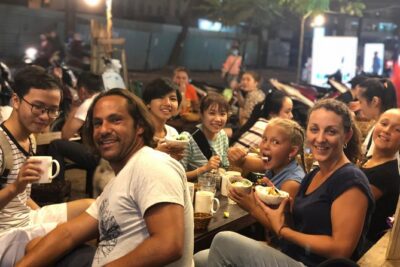
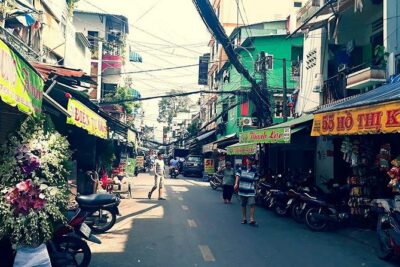
Saigon Afternoon Unseen Street Food by Scooter |Opt: Ao Dai Rider
Read our review →
Rome Afternoon Sightseeing Vespa Sidecar Tour with Gourmet Gelato
Read our review →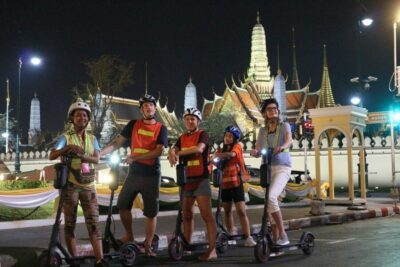
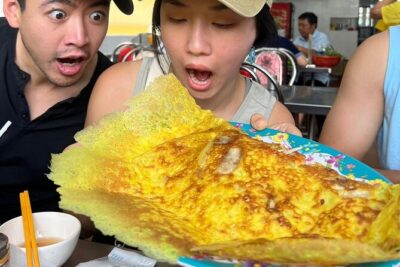
Saigon Food Tour by Scooter with Eleven Tastings
Read our review →
Private Ho Chi Minh Sightseeing and Food Tour by Scooter
Read our review →Browse the lists this tour appears in